 City
Guides
Language
EnglishCurrency
US dollar · $Prices on GetYourGuide appear in your chosen currency.
Guide · Plan your route
Hakone to Kyoto: the train, and which one suits you
Hakone to Kyoto is one of the classic moves on a first trip to Japan, and the two places could hardly be more different. Here is how to travel between them and how to choose.
Check availabilityfrom $50 · free to cancel
Editorial team, hakone-tour.comUpdated October 22, 2026about 6 min to read30 sources
Quick answer
From the mountains to the old capital
Going from Hakone to Kyoto means coming down from the mountains first. Every rail journey west starts at Odawara, the shinkansen station at the foot of the Hakone hills, and the Odakyu line from Hakone-Yumoto reaches Odawara in a 15-minute ride.1 If you are staying higher up, add the mountain railway or a bus down to Yumoto before that. From Gora the Tozan train takes about 40 minutes to Yumoto, so leave a comfortable margin before your shinkansen.6
At Odawara you board the Tokaido Shinkansen. The Hakone Tourist Association points out that Kodama trains stop at Odawara and only a few of the faster Nozomi trains do, so check the departure board before you buy.2 Its rail pass page gives the journey from Odawara to Kyoto as about 2 hours.3
Rail pass holders should note one more detail from Kyoto's own guide: an additional fee is needed to ride the Nozomi with a Japan Rail Pass.7 Since few Nozomi stop at Odawara anyway, the simple answer for pass holders is a Kodama or a Hikari. Sit on the side facing the sea for the first part of the ride, and keep an eye out on the other side for Mount Fuji if the sky is clear.
A travel day west
Leaving Hakone for Kyoto
-
After breakfast
Down to Yumoto
By mountain railway or bus from higher up.
-
Then
Odakyu to Odawara
A 15-minute ride from Hakone-Yumoto.1
-
At Odawara
Pick the right train
Kodama stop here; only a few Nozomi do.2
-
On board
Shinkansen west
About 2 hours from Odawara to Kyoto.3
-
Arrival
Kyoto Station
Japan's capital for over a thousand years from 794.8
Tokyo, Hakone and Kyoto in one line
Hakone sits neatly between Tokyo and Kyoto on the same railway, which is why so many itineraries put it in the middle. Kyoto's own guide gives Tokyo Station to Kyoto Station as about 130 minutes on the Nozomi or 170 minutes on the Hikari.9 Breaking that ride at Odawara turns a long transfer into easy halves with a night in the mountains between.
From Tokyo, the way in is equally simple: the limited express from Shinjuku reaches Hakone-Yumoto in about 80 minutes, or the shinkansen reaches Odawara in about 40 minutes.1011 Our guide to getting from Tokyo to Hakone covers those trains in detail.
The practical trick is luggage. A counter in Hakone-Yumoto Station delivers bags to your accommodation, so you can arrive with a suitcase, sightsee with a day bag, and pick everything up at your inn.12 When you leave for Kyoto the next day, the suitcase rides down with you to Odawara and onto the shinkansen. Large bags are easier on the shinkansen than on the compact mountain trains, so it pays to keep the heavy luggage at the inn while you explore.
Side by side
Kyoto and Hakone compared
| Topic | Kyoto | Hakone |
|---|---|---|
| What it is | Former capital, from 794 | Mountain valley in a national park |
| Signature | Over a thousand shrines and temples | 17 hot springs, officially |
| Summer | Often above 35°C | Cooler than Tokyo |
| Autumn leaves | Maples in November | Early October to early December |
| From Tokyo | About 130 min by Nozomi | About 80 min by limited express |
From the Kyoto City Tourism Association, the Hakone Tourist Association, Odakyu and Odakyu Hakone.84513141516910
Decision helper
Kyoto, Hakone or both?
Pick what matters most on this trip
The city is home to over a thousand shrines and temples, about 20 percent of Japan's National Treasures, and 15 percent of its Important Cultural Properties.
Hakone vs Kyoto: what each one is
The Hakone vs Kyoto question is really about what kind of day you want. Kyoto was Japan's capital for over a thousand years from 794, and it shows: the city has over a thousand shrines and temples, about 20 percent of Japan's National Treasures and 15 percent of its Important Cultural Properties.84 It is a city of history to be walked, street by street.
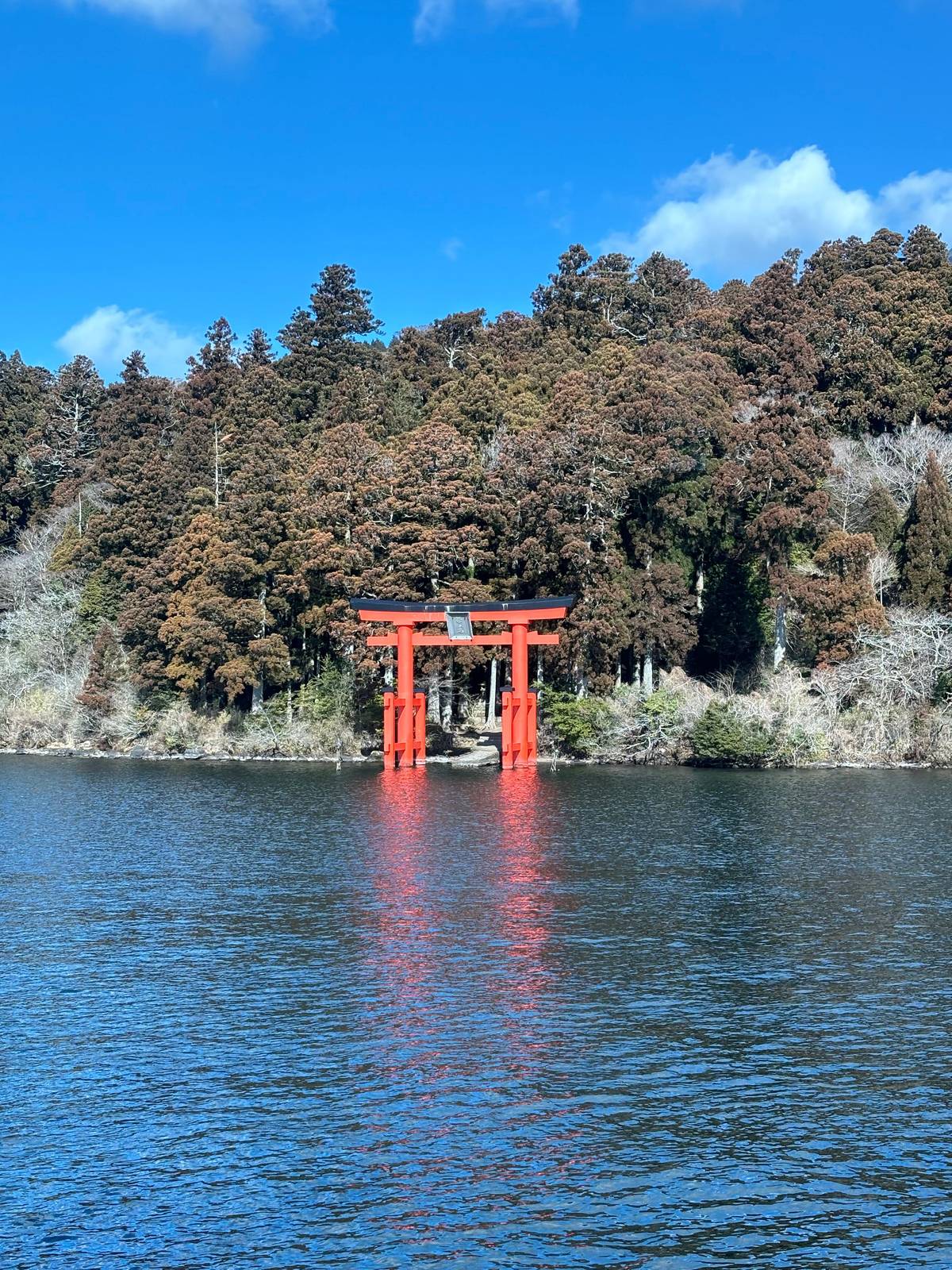
Hakone is a mountain valley inside Fuji-Hakone-Izu National Park.18 It has officially 17 hot springs, a mountain railway that climbs at 80 per mille, a sculpture park with about 120 works outdoors, and an old highway lined with cedars.5192021 Its pleasures are slower: a long bath, a ryokan dinner, a ride up the valley.
Neither replaces the other. Kyoto gives you temples, gardens and old streets in depth; Hakone gives you nature, hot water and a night of quiet in a traditional inn. If your trip has room for only one, choose by mood rather than by fame, because both are famous for good reasons. If you love history, food and city walks, lean to Kyoto; if you want fresh air, a hot bath and a slower evening, lean to Hakone. A first trip to Japan can find room for both, with Hakone as the pause between the two big cities.
Checklist
For the move from Hakone to Kyoto
01
Before the day
- Check which trains stop at Odawara
- Nozomi needs an extra fee with a rail pass
- Avoid a same-day tour and train
02
On the day
- Down to Yumoto, then Odakyu to Odawara
- Collect bags from your inn
- Allow time for the mountain leg
Cost calculator
Price a Hakone day before Kyoto
Enter your group size to compare days out from Tokyo.
People
Total from$100
per guest from $50
Check availabilityfree cancellationTotals take each listing's cheapest GetYourGuide price times the number of travellers, turned into your own currency with the European Central Bank's figure for today; the sum at checkout is the one that counts.
Video
3 Day Trip from Tokyo to Kyoto via Hakone
Nothing loads until you tap play.
Seasons and weather compared
Summer is where the two differ most. Kyoto's own guide warns that temperatures often rise above 35°C in midsummer, because the mountains around the city block cooling winds.13 Odakyu Hakone describes summer in Hakone as cooler than Tokyo, and says Lake Ashi and Owakudani are usually 3 to 4°C cooler than the Yumoto area.1422
In spring and autumn both shine. Kyoto calls spring and autumn its most comfortable seasons for sightseeing, and its maple leaves colour as the city cools in November.2315 Hakone's fall colours run from early October to early December, and its cherry blossoms from late March to early April.1624
Winter favours Hakone's baths. Odakyu Hakone notes snowy days in winter and advises a thick coat, with layers because the elevation varies.2526 A cold evening in an outdoor bath, with steam rising into freezing air, is one of the quiet joys of a Japanese winter. Kyoto in winter has its own appeal, but its streets are colder to walk than a hot spring is to sit in.
Crowds and pace
Both places draw crowds, at different moments. In Hakone, Odakyu forecasts the busiest times as Golden Week from late April to early May, Obon from 10 to 16 August and the autumn leaves in November.272829 In Kyoto, spring and autumn are the comfortable seasons, so expect company there then as well.23
The pace is different too. In Kyoto you walk from temple to temple and can stretch a day into the evening. In Hakone the mountain railway, cable cars and buses set the rhythm, and sights keep daytime hours; the Open-Air Museum, for example, is open from 9:00 to 17:00.30
That is why a night in Hakone works better than a rushed day. Arrive by mid-afternoon, see one area properly, soak in the evening, and leave for Kyoto after breakfast. You arrive in Kyoto rested instead of worn out by a long day of sightseeing.
If you only have one day for Hakone
Some travellers have time for Hakone only as a day out from Tokyo before heading on to Kyoto. A coach tour is the most efficient way to see the famous loop in that case. The tour this site sells runs from Tokyo to Hakone Shrine, the Togendai pier, a one-way ropeway ride and Owakudani, then to Lake Yamanaka and Oshino Hakkai, before returning to Tokyo.
It is rated 4.91 from 872 reviews and starts from $50. The operator asks guests not to book shinkansen trains on the tour day during the peak holiday week of 8 to 16 August 2026, when traffic jams are frequent. Keep the Kyoto train for the next morning and you lose nothing.
The alternative is to go by train with your luggage, spend a night, and take the shinkansen west from Odawara the next day. It costs one more hotel night but saves going back to Tokyo, and it turns Hakone from a box ticked into a proper stop on the way. If you choose that route, pick a ryokan near Yumoto or along the mountain railway, so the walk to the train on departure morning is short.
Your Hakone day
Shrine, steam and the Fuji lakes in a day.
Pick a date, meet in Tokyo, and cancel free up to 24 hours before.


You ask,we answer.
Which station do I use for Kyoto?
Odawara. The Odakyu line from Hakone-Yumoto reaches Odawara in 15 minutes; the shinkansen leaves from there.1
Do all shinkansen stop at Odawara?
No. Kodama trains stop there, and only a few Nozomi do, so check the board before you buy.2
How long is Odawara to Kyoto?
About 2 hours. That is the Hakone Tourist Association's figure for the shinkansen ride from Odawara.3
Is Kyoto hotter than Hakone in summer?
Yes. Kyoto often goes above 35°C in midsummer; Hakone is cooler than Tokyo, and its lake cooler still.131422
Does the Japan Rail Pass cover the Nozomi?
Only with an extra fee. Kyoto's guide says an additional fee is needed for the Nozomi with the pass.7
Should I stay a night in Hakone?
If you can, yes. A night lets you soak in a ryokan bath and leave for Kyoto rested the next morning.
Can I do Hakone as a day trip and then go to Kyoto?
Yes, but not the same day. Keep the shinkansen for the next day; for 8 to 16 August 2026 the operator asks guests not to book trains on the tour day.
Sources
The sources for this guide
- 1Hakone Tourist AssociationJR Railpass and Hakone↩
- 2Hakone Tourist AssociationHow do I go to Hakone?↩
- 3Hakone Tourist AssociationCan I use the JR Railpass from Tokyo to Hakone?↩
- 4Kyoto City Tourism Association (Kyoto City official guide)History & Religion↩
- 5Hakone Tourist Association (text by the Japan Tourism Agency)The 17 hot springs of Hakone↩
- 6Hakone Tourist AssociationThe Hakone Tozan Train↩
- 7Kyoto City Tourism Association (Kyoto City official guide)Getting to Kyoto↩
- 8Kyoto City Tourism Association (Kyoto City official guide)History & Religion↩
- 9Kyoto City Tourism Association (Kyoto City official guide)Getting to Kyoto↩
- 10Odakyu Electric RailwayLimited Express from Shinjuku to Hakone: ticket details↩
- 11Hakone Tourist AssociationJR Railpass and Hakone↩
- 12Odakyu Hakone (hakonenavi)Hakone-Yumoto Station↩
- 13Kyoto City Tourism Association (Kyoto City official guide)Seasonal information↩
- 14Odakyu Hakone (hakonenavi)Seasonal highlights: summer↩
- 15Kyoto City Tourism Association (Kyoto City official guide)Seasonal information↩
- 16Odakyu Hakone (hakonenavi)Seasonal highlights: winter↩
- 17Hakone Tourist AssociationCan I use the JR Railpass from Tokyo to Hakone?↩
- 18The Hakone Open-Air MuseumAbout Us↩
- 19Visit Kanagawa (Kanagawa Prefectural Government)Hakone Tozan Railway↩
- 20The Hakone Open-Air MuseumThe Hakone Open-Air Museum↩
- 21Visit Kanagawa (Kanagawa Prefectural Government)Old Hakone Highway cedar-lined road↩
- 22Odakyu Hakone (hakonenavi)Before your trip↩
- 23Kyoto City Tourism Association (Kyoto City official guide)Seasonal information↩
- 24Odakyu Hakone (hakonenavi)Seasonal highlights: spring↩
- 25Odakyu Hakone (hakonenavi)Seasonal highlights: winter↩
- 26Odakyu Hakone (hakonenavi)Before your trip↩
- 27Odakyu Hakone (hakonenavi)Crowd forecast↩
- 28Odakyu Hakone (hakonenavi)Crowd forecast↩
- 29Odakyu Hakone (hakonenavi)Crowd forecast↩
- 30The Hakone Open-Air MuseumThe Hakone Open-Air Museum↩