 Flowers
Spring
March to May
- Cherry
- Late Mar to early Apr
- Azaleas
- Early Apr to late May
- Avoid
- Golden Week
Guides
Language
EnglishCurrency
US dollar · $Prices on GetYourGuide appear in your chosen currency.
Guide · When to go
The best time to visit Hakone depends on what you want to see. Here is the year month by month: flowers, colours, rain, temperatures and the dates the crowds come.
Editorial team, hakone-tour.comUpdated October 22, 2026about 6 min to read22 sources
Quick answer
There is no single best time to visit Hakone, because the valley changes so much from season to season. Odakyu Hakone counts spring as March to May, summer as June to August, fall as September to November and winter as December to February, and each brings its own flowers, colours and crowds.8
Height matters as much as the calendar. Odakyu Hakone gives average temperatures for the Hakone-Yumoto area of 15°C in spring, 25°C in summer, 15°C in fall and 7°C in winter, and notes that Lake Ashi and Owakudani are usually 3 to 4°C cooler.9 The temperatures in the table on this page come from Odawara at the foot of the mountains, so expect the upper valley to be colder.
Rain is the other constant. The Japan Meteorological Agency's normals for its Hakone station, high in the caldera, count 16 rainy days of 1 mm or more in June and 15 in September.4 Plan an indoor fallback for wet days, such as a museum or a long bath. Mountain weather can change quickly, so a wet morning can still turn into a clear afternoon at the top of the valley.10
A year of colour
Late Mar to early Apr
Blossom moves from Yumoto up to the lake.2
Early Apr to late May
Gardens and hillsides in flower.11
Late May to late Jul
Early Sep to early Nov
Early Oct to early Dec
Winter
Snowy days and illuminated areas.7
Cherry blossoms reach Hakone from late March to early April, and azaleas follow from early April to late May.211 The blossom moves uphill with the warmth, so trees by the lake can still be in flower when those in Yumoto have finished.
Spring days are mild, but Odakyu Hakone warns that early mornings and evenings are cold and recommends long sleeves and a cardigan.16 At Odawara the average daily high in April is 18.9°C and the low 9.2°C; up in the mountains it is colder.4
Spring is one of the ideal hiking seasons, according to the Hakone Tourist Association, which makes it a good time for the old Tokaido road.10 The main thing to avoid is Golden Week, from late April to early May, when Odakyu Hakone expects Hakone to be crowded.5 Outside that week, spring weekdays are a pleasant time to walk, with fresh green leaves and long, bright afternoons.
Month by month
Climate
| Month | Daylight (h) | Darkness (h) | High / low | Wet days | In Hakone |
|---|---|---|---|---|---|
| Jan | 10 | 14 | 11 / 1 °C | 8 | Snowy days possible |
| Feb | 10.9 | 13.1 | 11 / 1 °C | 9 | Snowy days possible |
| Mar | 11.9 | 12.1 | 14 / 4 °C | 13 | Cherry blossom, late |
| Apr | 13 | 11 | 19 / 9 °C | 13 | Cherry, azaleas |
| May | 14 | 10 | 23 / 14 °C | 13 | Azaleas, hydrangeas |
| Jun | 14.5 | 9.5 | 25 / 18 °C | 16 | Hydrangeas |
| Jul | 14.3 | 9.7 | 29 / 22 °C | 16 | Hydrangeas |
| Aug | 13.5 | 10.5 | 31 / 23 °C | 13 | Obon crowds |
| Sep | 12.5 | 11.5 | 27 / 20 °C | 15 | Silver grass |
| Oct | 11.4 | 12.6 | 22 / 14 °C | 13 | Silver grass, colour |
| Nov | 10.3 | 13.7 | 17 / 8 °C | 10 | Fall colours peak |
| Dec | 9.8 | 14.2 | 13 / 3 °C | 7 | Snowy days possible |
Highs and lows are Japan Meteorological Agency normals for Odawara at the foot of the mountains, rainy days of 1 mm or more are for its Hakone station at 855 m, 1991 to 2020; Gora and the lake run cooler, and we work out the day length ourselves.4 Season according to Odakyu Hakone.8
Pick your season
FlowersMarch to May
 Hydrangeas
June and July
 Leaves
September to November
Decision helper
Pick what you most want from Hakone
However, Lake Ashi and the Owakudani area have high elevations and are usually around 3-4℃ lower.
Hydrangea season in Hakone runs from late May to late July.3 Along the Hakone Tozan Railway they bloom around mid-June, when the line is nicknamed the Hydrangea Railway, and at Amidaji temple above Tonosawa from late June to mid July.1217
This is also the stretch with the most rainy days. At the Hakone station, June brings 420.4 mm of rain over 16 rainy days, and July 425.3 mm over 16.4 Hydrangeas love rain, and a misty day on the mountain railway can be lovely, but views of Fuji are rare and paths are slippery.
Summer temperatures in Hakone are lower than in Tokyo, which is why the area grew as a summer retreat.18 At Odawara the average daily high is 29°C in July and 30.6°C in August; the mountains above are cooler.4 Obon, from 10 to 16 August, is one of the busiest weeks of the year.6
Checklist
Video
Nothing loads until you tap play.
Hakone fall foliage runs from early October to early December, and Odakyu Hakone says the scenery is best in November, when many people visit for the leaves.115 The colour starts high on the mountains and works its way down to Yumoto, so you can follow it downhill over a few weeks. Gardens such as Gora Park and the moss garden of the Hakone Museum of Art add maples to the mix, which makes the Gora area a good base in the season.
Silver grass is the other autumn sight, from early September to early November.13 The Sengokuhara silver grass plains are among the best in the Kanto region and one of the scenes that define autumn in Hakone.14 Hiking is at its best now too: autumn is the other ideal hiking season.10
September is still wet, with 448.7 mm of rain at the Hakone station, the highest monthly total in its normals, while November drops to 197.1 mm.4 On 3 November the Hakone Daimyo Gyoretsu procession fills Yumoto, a good reason to time a visit if you like festivals.19
Hakone in winter is quieter, colder and, on a clear day, at its most atmospheric. Odakyu Hakone notes there are snowy days in winter and that several areas are illuminated.7 It advises a thick coat, with layers because the elevation varies from place to place.20
At Odawara the average daily high in January is 10.6°C and the low 0.6°C; at Lake Ashi and Owakudani it is colder still.49 Rain is lowest in winter, with 7 rainy days in December and 8 in January at the Hakone station.4
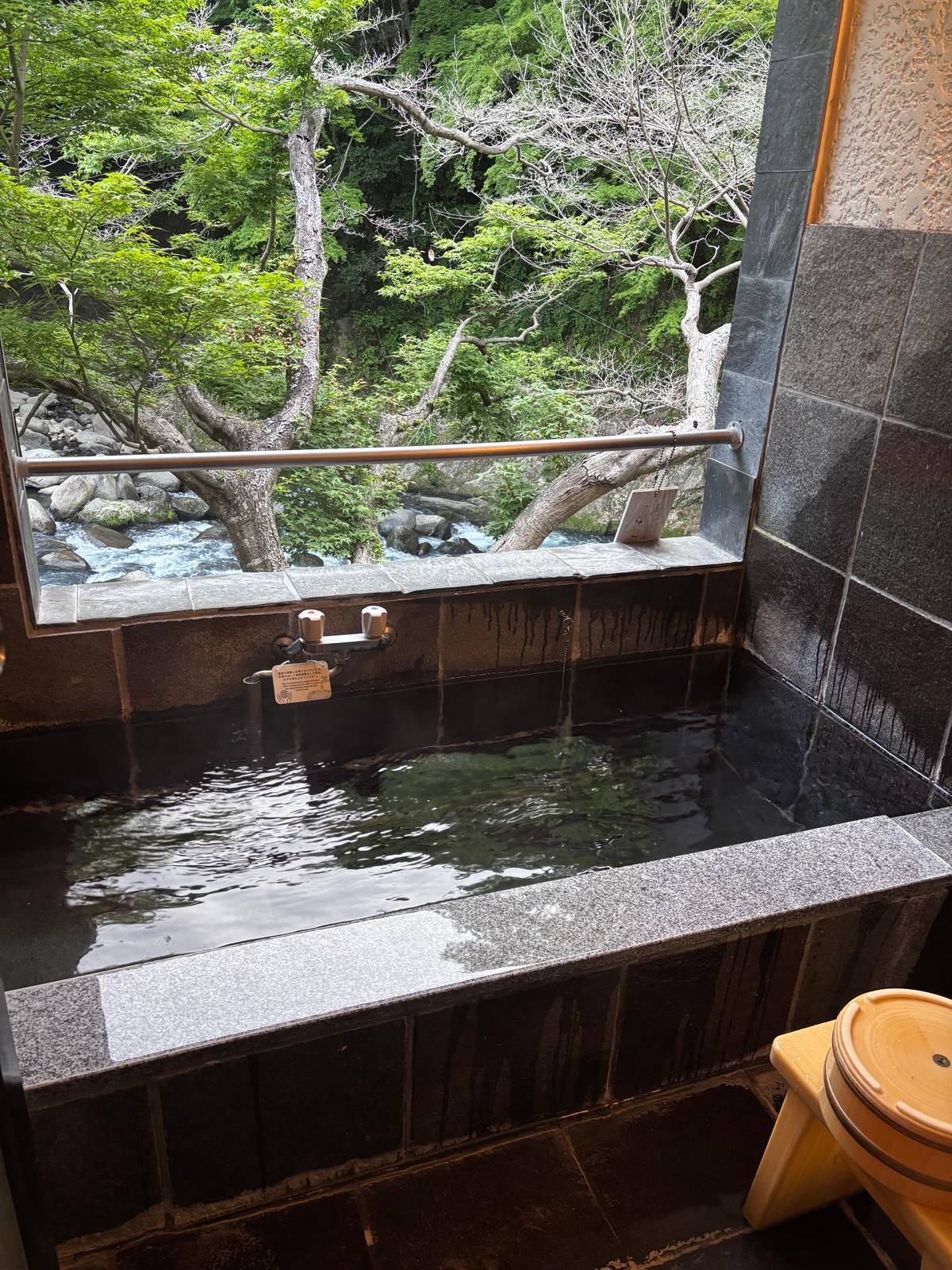
Winter is the season for hot springs. An outdoor bath with cold air on your face is one of the great pleasures of a Japanese winter, and Hakone's ryokan are made for it. Note the Hakone Ekiden relay on 2 and 3 January, when traffic is restricted in some areas.2122
If you can choose your dates, avoid the peaks. Odakyu Hakone forecasts crowds for Golden Week from late April to early May, Obon from 10 to 16 August, and the autumn leaves in November.5615 Weekdays outside those weeks are far easier.
The coach tour this site sells adds its own warnings. It lists 8 to 16 August 2026 as peak holiday season with frequent traffic jams and asks guests not to book dinners, flights or shinkansen trains on the tour day. On weekends and public holidays its route and stop times may change with traffic or early closures.
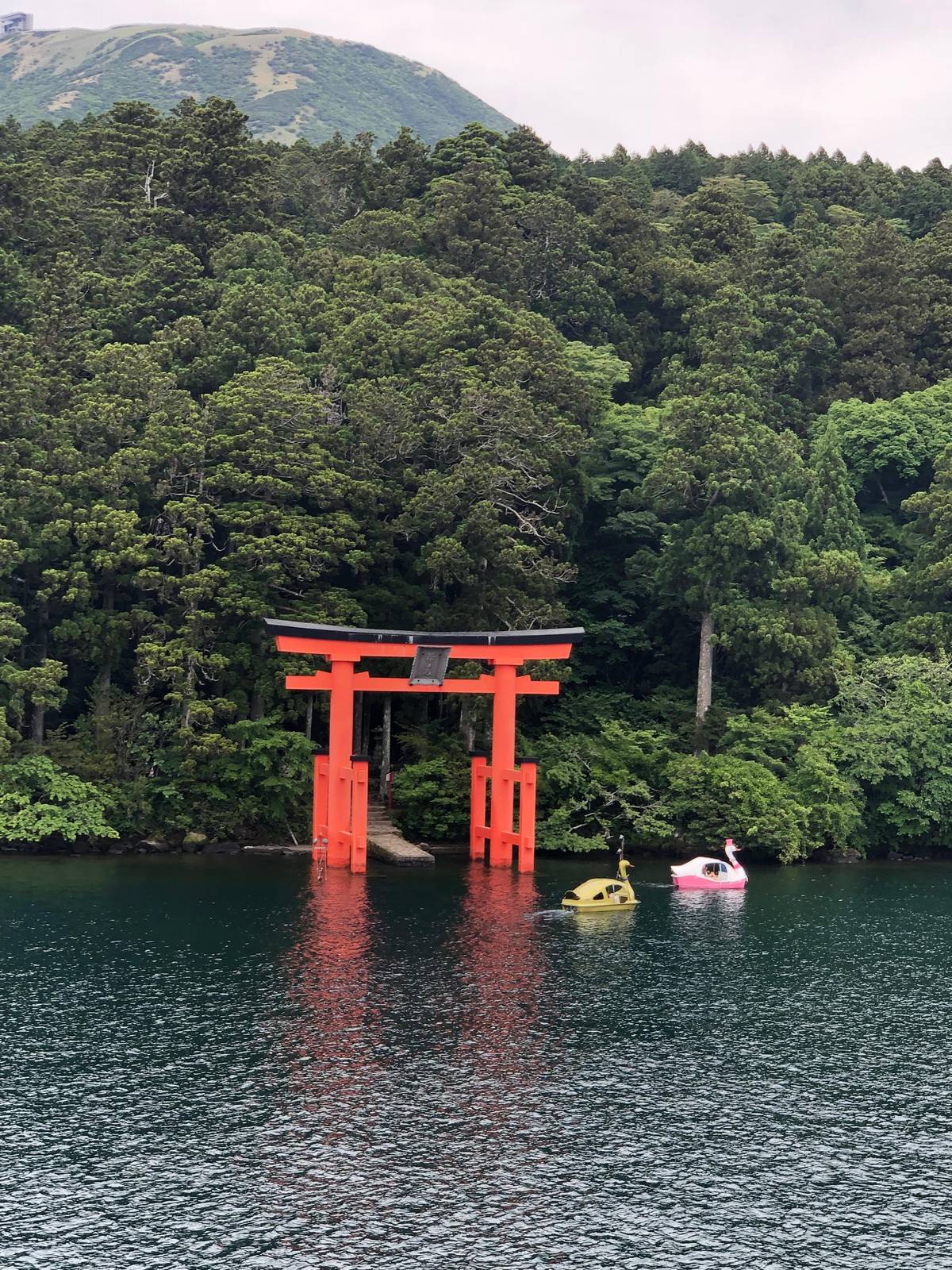
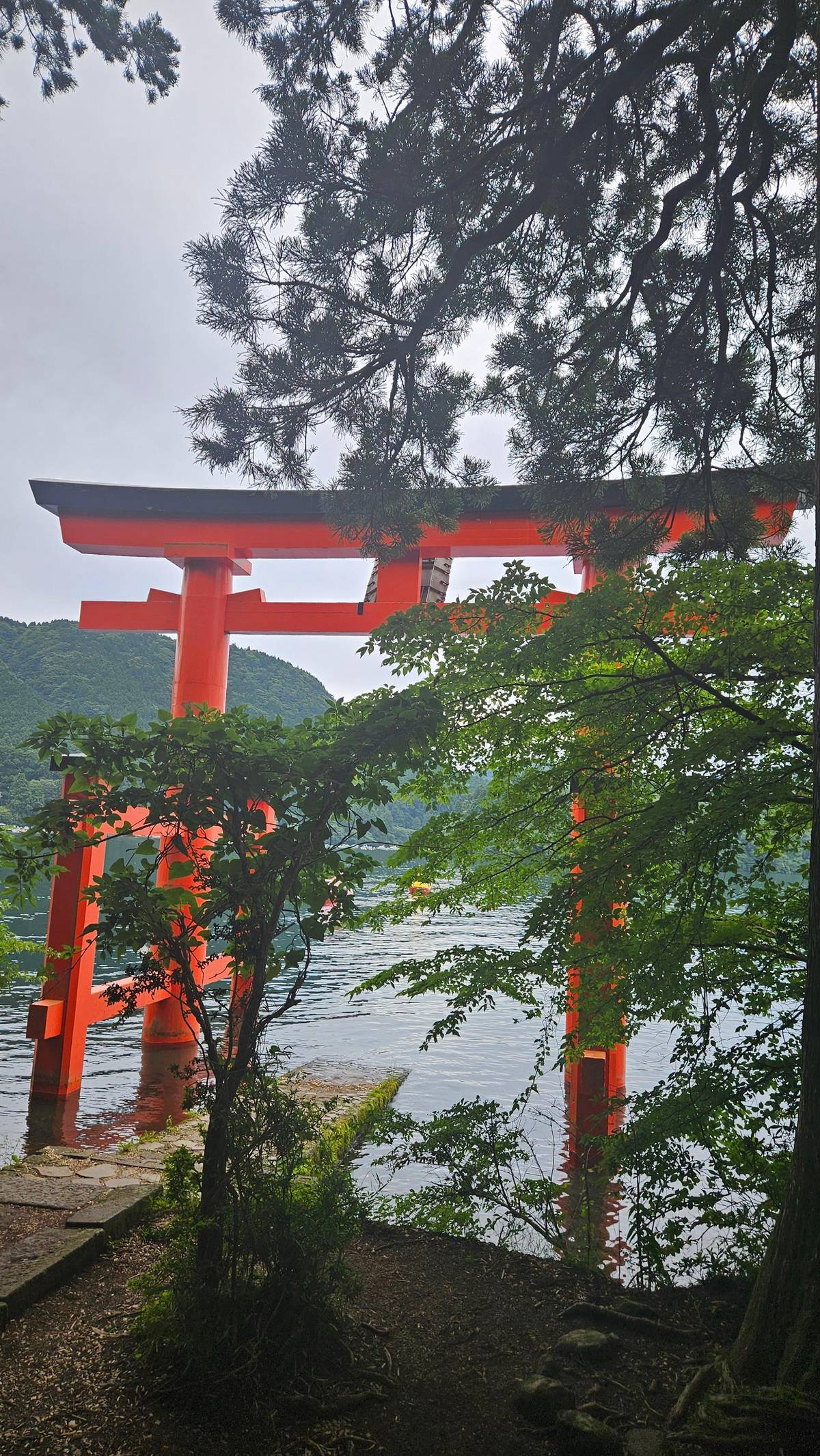
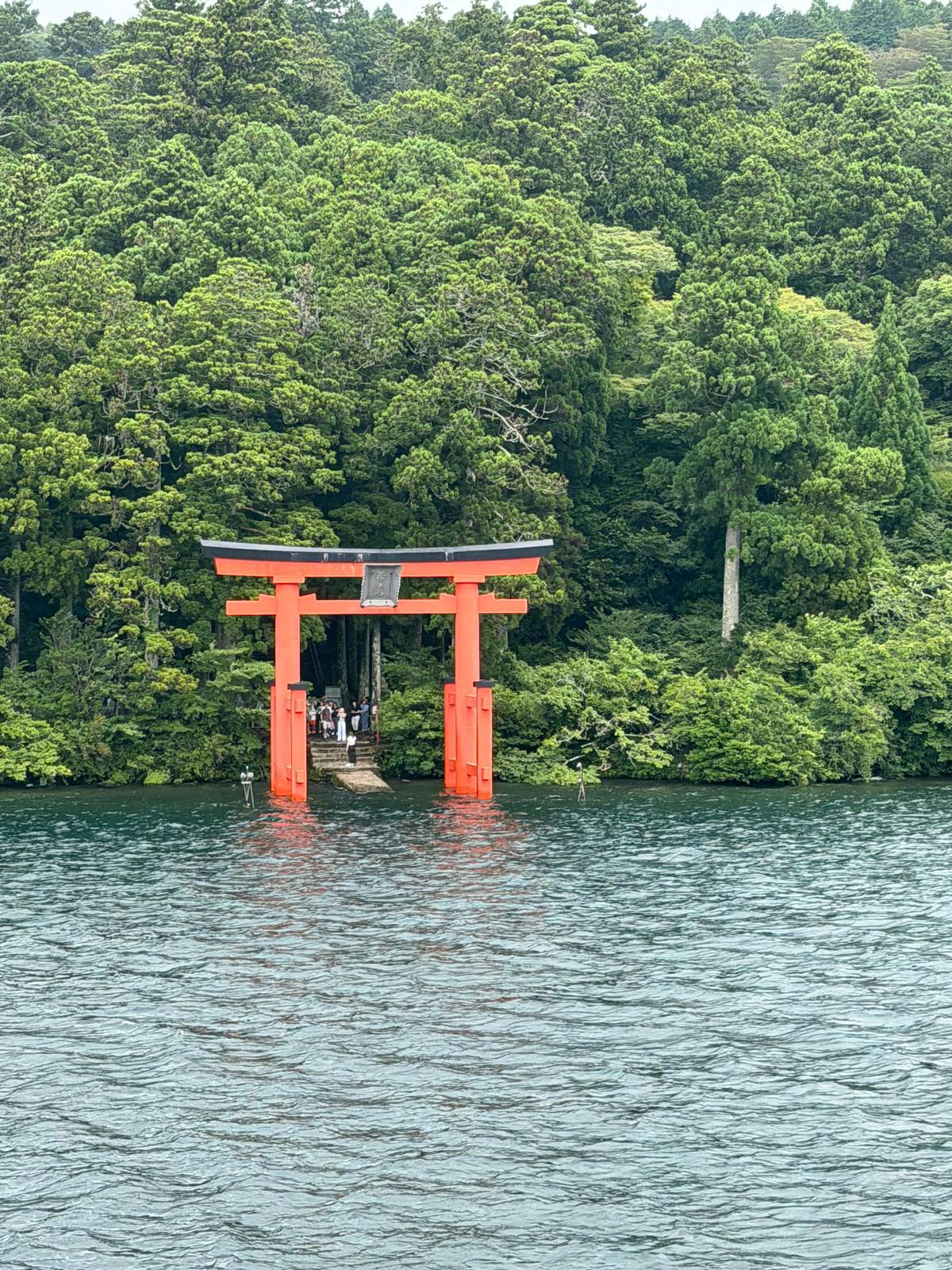
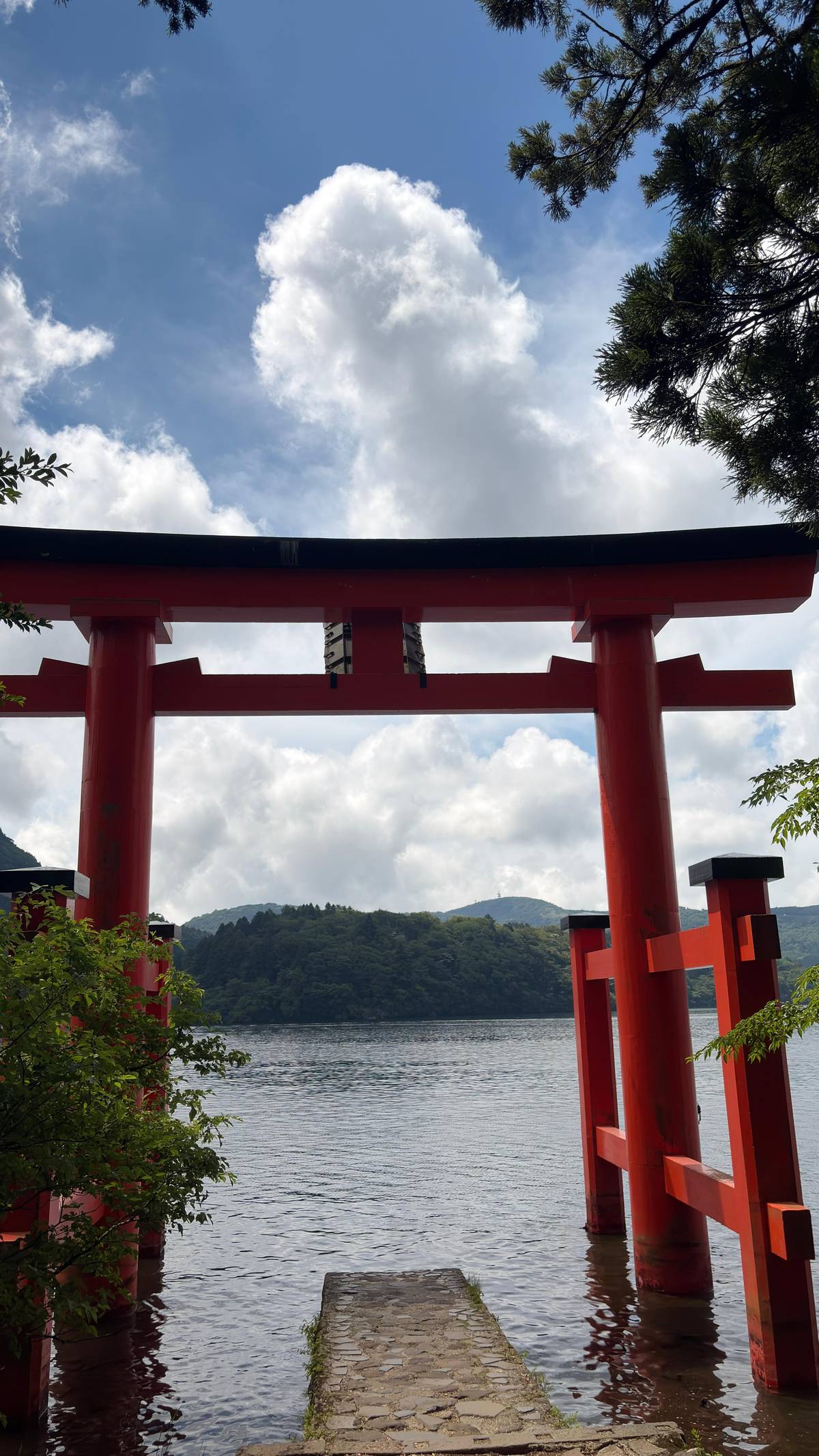
Winter brings a different change: the torii of Hakone Shrine is closed from 29 December to 10 February, and in that period the tour gives the extra time to the shrine itself. Mount Fuji views are never guaranteed in any month, as the listing says plainly.
For flowers and mild weather, go in spring, outside Golden Week. For the most colour, go in November, early in the week. For hydrangeas and the mountain railway at its prettiest, go in mid-June and accept some rain. For quiet, hot baths and crisp air, go in winter.
Whatever the month, plan around the weather rather than against it. Keep a flexible day, start early, and have a museum, a bath or a ryokan dinner as your rainy-day plan. Hakone is at its best when you give it time to clear. Even on a grey day the forests, temples and baths reward a visit, so do not write off a cloudy morning.
If you only have one day, any season works for the coach tour, which runs the famous upper loop and returns you to Tokyo the same evening. Book it with free cancellation up to 24 hours before, and you can still change plans if the forecast turns.
Your Hakone day
Pick a date, meet in Tokyo, and cancel free up to 24 hours before.
Early October to early December. Odakyu Hakone says the fall scenery is best viewed in November, when many visit.115
Late March to early April. They move uphill with the warmth, so the lake area can bloom later than Yumoto.2
Late May to late July. Along the mountain railway they bloom around mid-June, its Hydrangea Railway weeks.312
On some winter days. Odakyu Hakone notes snowy days in winter and advises a thick coat and layers.720
September, then July and June. The Hakone station averages 448.7 mm in September, 425.3 mm in July and 420.4 mm in June.4
Sources