 1 hour here
Private day from Tokyo
Customizable, with a driver
- Museum stop
- 1 hour listed
- Hours
- 10
- Price
- from $395
Guides
Language
EnglishCurrency
US dollar · $Prices on GetYourGuide appear in your chosen currency.
Guide · Art and gardens
A hillside of sculpture facing the Hakone mountains, a Picasso collection and a stained-glass tower you can climb. Here is how to plan a visit, from tickets to the footbath.
Editorial team, hakone-tour.comUpdated October 22, 2026about 6 min to read50 sources
Quick answer
The Hakone Open-Air Museum opened in 1969, set up by the Fujisankei Communications Group inside Fuji-Hakone-Izu National Park.7 Its founding idea was to bring sculpture out of the gallery and into the landscape, at a time when artists were making ever larger works meant for open air. The result is a museum you walk through rather than look into, with works placed on lawns, beside ponds and against the mountain skyline, so the weather and the light become part of each piece.
The museum's own figure is about 120 modern and contemporary sculptures on a site of about 70,000 square meters overlooking the Hakone mountains.8 Its exhibits page gives some 100 works by masters including Rodin, Bourdelle, Miro and Moore; the difference is a matter of counting, and either way you will not see them all in a hurry.5
Behind the outdoor works stands a far bigger collection. The foundation holds over 2,000 works, focused on modern and contemporary sculpture, and has run 21 international sculpture competitions to add to them.910 The grounds mix lawns, ponds and wooded paths, and the views across the valley change with every season.
A morning at the museum
9:00
Arrive at opening for the quietest lawns.1
First hour
About 120 works on 70,000 square meters.8
Next
Climb Gabriel Loire's stained-glass tower.11
Late morning
135 works in the current exhibition.12
Before lunch
Spring water for tired feet, with seats.13
Midday
About 3 minutes up the line by Tozan train.14
The Picasso Pavilion at the Hakone Open-Air Museum is the reason many visitors come. The museum holds over 300 works by Pablo Picasso, centred on 188 ceramics bought from his daughter Maya.15 The current exhibition, running since 29 June 2025, shows 135 of them arranged in 20 themes, from bullfighting scenes to playful faces.16
Odakyu describes the pavilion as rotating a collection of 319 pieces; the museum's own figures are the safer guide for what is on the walls on your day.1712 Other indoor rooms show masterpieces by sculptors such as Brancusi and Giacometti, so a rainy hour indoors is never wasted.
Indoors the rules are stricter than outside. Photography is for personal use only, and flash, video, tripods and selfie sticks are not allowed in the indoor exhibition area.18 Some works carry a no-photo sign; respect it, and save your camera for the gardens, where almost everything can be photographed.
Guided days with the museum
1 hour hereCustomizable, with a driver
 2 hours here
 Your route
Route agreed with your guide
Decision helper
Fit the visit to your Hakone plans
Some 100 masterpieces by the world masters of modern and contemporary art, including Rodin, Bourdelle, Miro and Moore, are exhibited within 70,000 square meters of green garden.
Henry Moore is the museum's other great name. A rotating display of 26 of his works, from his years of peak maturity to his late period, stands around the grounds.6 Their rounded bronze forms look different in sun, rain and mist, which makes them worth a second look on the way out. Moore liked his sculptures seen against open sky and hills, and Hakone gives them exactly that, with the ridges of the old crater as a backdrop.
The Symphonic Sculpture is the work most people photograph. It is a tower by the French stained-glass artist Gabriel Loire, entirely covered in stained glass, with a spiral stair running up inside.11 On a bright day the light inside turns every colour of the glass onto the walls and the people climbing.
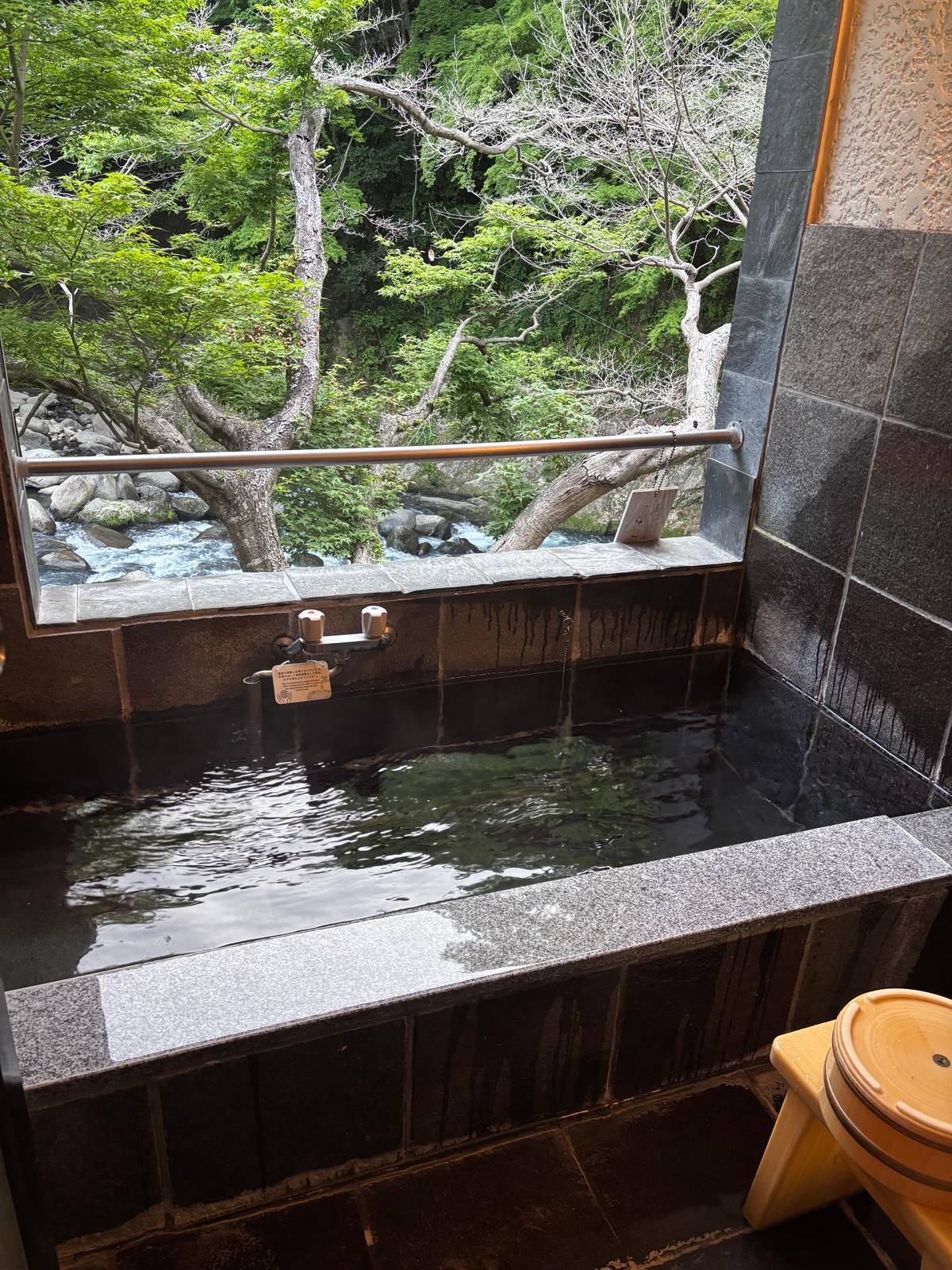
Do not leave without a rest at the footbath. The museum has footbaths and handbaths fed by spring water, with seating for wheelchair users.13 It is a uniquely Hakone touch: a hot-spring soak for tired feet in the middle of an art museum.
Map
The whole valley first, then the railway climb to Gora, the streets around Yumoto station, the cedar road over the pass and the way in from Tokyo.
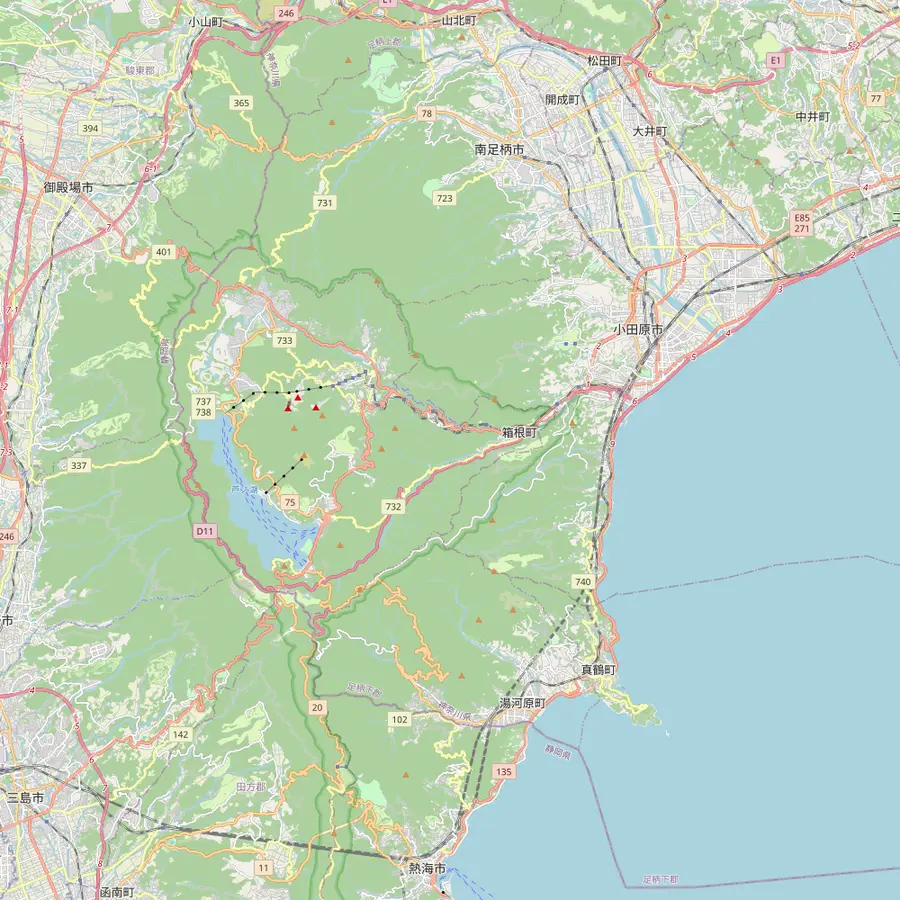 1Yumoto Station2Hakone Open-Air Museum3Owakudani4Sengokuhara5Hakone Checkpoint
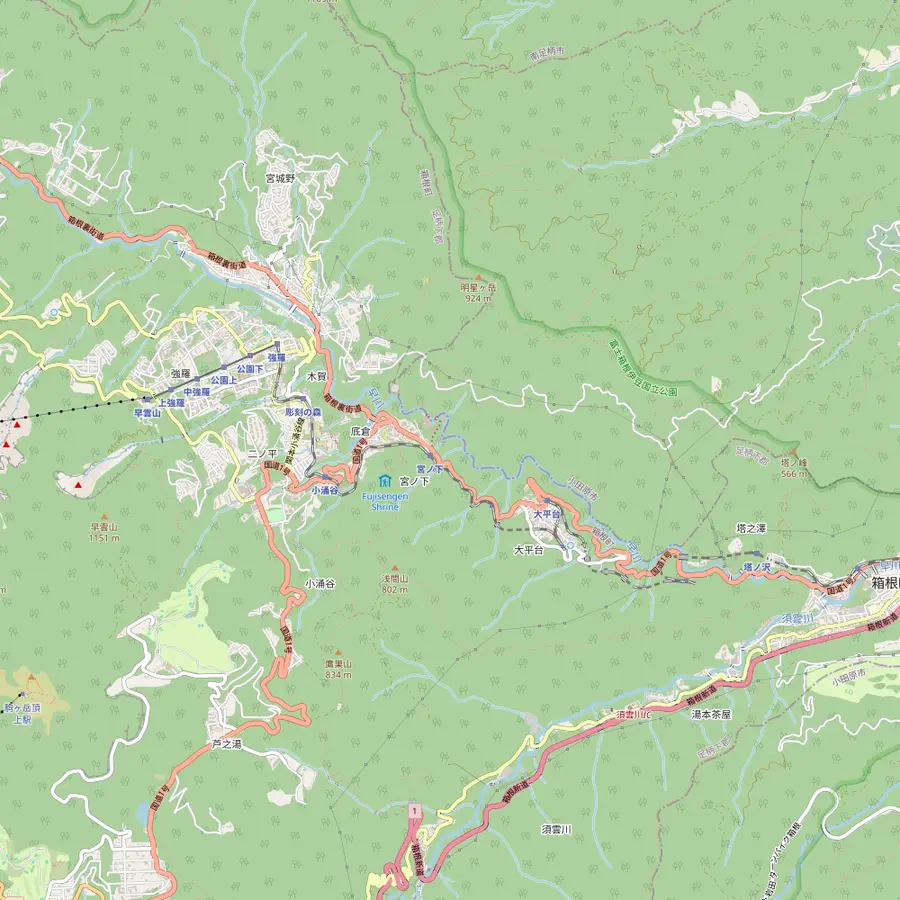 6Tonosawa Station7Ohiradai Station8Miyanoshita Station9Kowakidani Station10Chisuji Falls11Gora Station12Hakone Gora Park13Sounzan Station
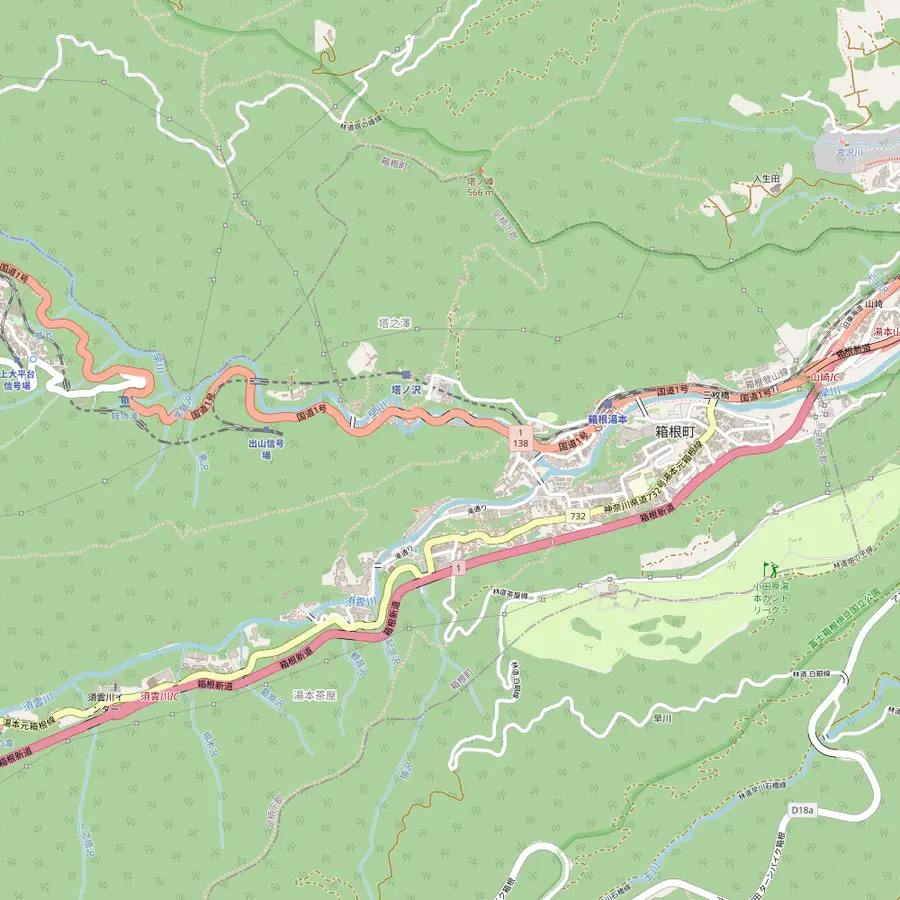 14Sounji Temple15Tenzan bathhouse16Amidaji Temple
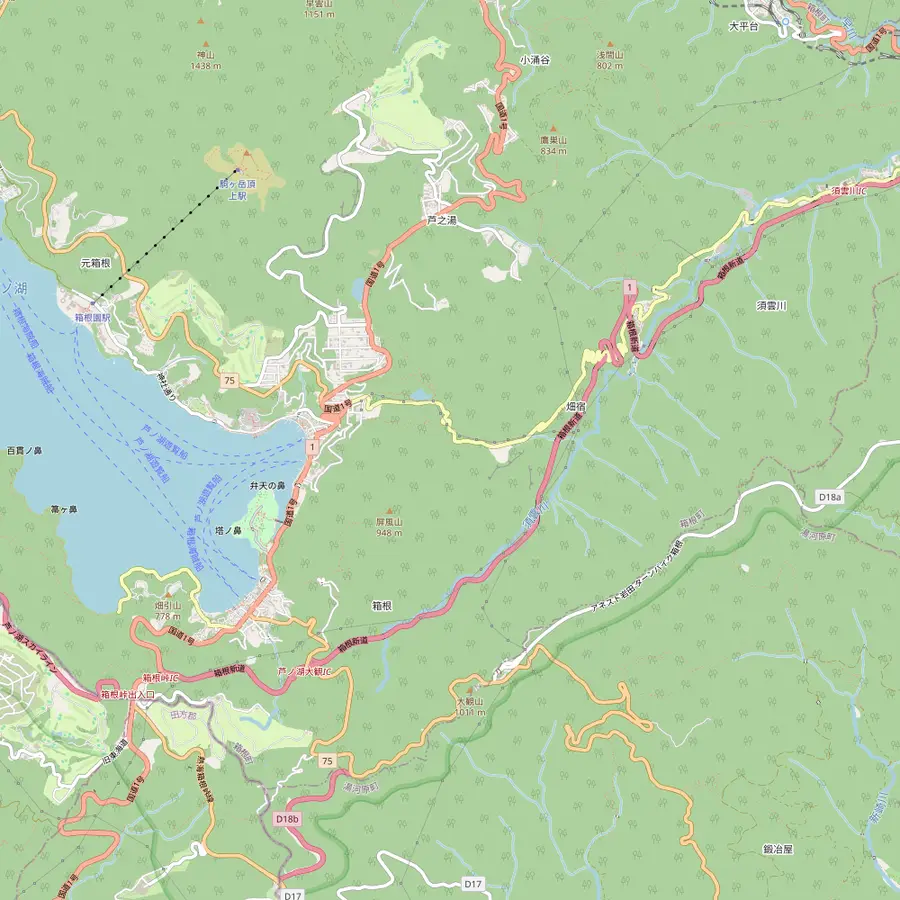 17Hatajuku18Amazake Chaya19Old Tokaido cedar avenue
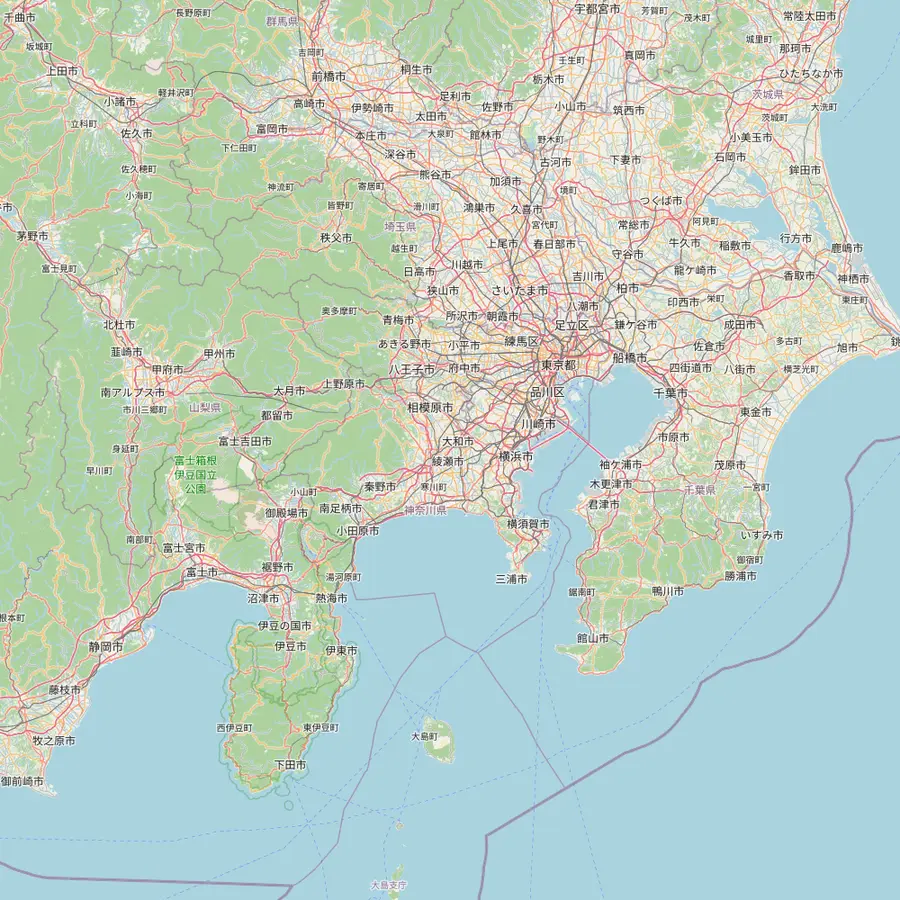 20Shinjuku Station21Odawara Station
The limited express from Shinjuku ends here after about 80 minutes; platform 3 is for the Tozan Railway up to Gora.2122
In Google Maps ↗Sculpture park opened in 1969, a 2-minute walk from Chokoku-no-Mori Station on the Tozan line.74
In Google Maps ↗A stop on the day tour this site sells, reached on the Hakone Ropeway.
In Google Maps ↗Highland area with silver grass plains in autumn; express buses run here from Shinjuku in about 2 hours.2324
In Google Maps ↗Reconstructed Edo-period checkpoint, open to the public since April 2007, with a museum of 300 items.2526
In Google Maps ↗First stop above Yumoto; a path of no more than 20 minutes leads up to Amidaji.27
In Google Maps ↗One of the switchbacks where the train reverses to keep climbing.28
In Google Maps ↗Village of the Fujiya Hotel, developed as a summer retreat from Tokyo and Yokohama.29
In Google Maps ↗Chisuji Falls is a 20-minute stroll from here.30
In Google Maps ↗Water threads down a mossy volcanic wall 20 meters wide and 3 meters tall.31
In Google Maps ↗End of the Tozan line, where the cable car continues uphill.32
In Google Maps ↗Garden opened in 1914, a 5-minute walk from Gora Station.3334
In Google Maps ↗Top of the cable car, 209 meters above Gora, and the ropeway transfer.35
In Google Maps ↗Rinzai Zen temple founded in 1521 in honour of Hojo Soun.36
In Google Maps ↗Day-use bathhouse with public baths only, no private bath, and cash payment.3738
In Google Maps ↗Hydrangeas line its path from late June to mid July.39
In Google Maps ↗Village of yosegi marquetry, with reconstructed milestone mounds that marked 23 ri from Edo.4041
In Google Maps ↗Thatched teahouse run by 12 generations, open 7am to 5:30pm.4243
In Google Maps ↗Cedars more than 350 years old, some 30 to 40 meters tall, line the old road by the lake.44
In Google Maps ↗Odakyu limited expresses leave here for Hakone-Yumoto, about 80 minutes away.21
In Google Maps ↗Shinkansen stop; from here the Odakyu line reaches Hakone-Yumoto in 15 minutes.45
In Google Maps ↗Checklist
Video
Nothing loads until you tap play.
The museum is open year round, every day from 9:00 to 17:00, and last admission is 30 minutes before closing.1 Same-day tickets cost 2,000 yen for adults, 1,600 yen for university and high school students and 800 yen for middle and elementary school students, at the museum's listed prices.2
Buying online saves money: online tickets are 1,800 yen for adults, 1,400 yen for students and 600 yen for younger pupils, and preschool children enter free.319 Prices can change, so check the museum's own site the week you travel, and buy from the museum rather than a reseller.
Visitors with a disability certificate and their caregiver pay reduced rates, and groups have their own price, all set out on the museum's visitor page. Coin lockers at the entrance are free, and wheelchairs and strollers can be borrowed at no charge.4647
By rail the museum is simple to reach. Take the Odakyu Line from Odawara to Hakone-Yumoto, change to the Hakone Tozan Railway, and get off at Chokoku-no-Mori Station, a 2-minute walk from the entrance.4 From Gora Station, at the top of the line, the train back down to Chokoku-no-Mori takes about 3 minutes.14
Buses are the alternative. From Odawara or Hakone-Yumoto, an H, J or Z bus runs to the Ninotaira-iriguchi stop, then it is a 6-minute walk.48 The museum's address is Ninotaira 1121, Hakone-machi, which is useful to show a taxi driver.49
From Tokyo, the limited express from Shinjuku reaches Hakone-Yumoto in about 80 minutes, so the museum makes an easy day out on its own.21 Combine it with Gora's gardens uphill or a bath in Yumoto downhill, and you have a calm Hakone day without a single coach. Arriving soon after opening leaves the whole day for the lawns, the pavilion and a long rest at the footbath.
Children have their own corner of the collection. Woods of Net, a giant hand-crocheted net artwork by Toshiko Horiuchi inside a wooden dome, is open to children aged 12 and under, shoes off, and can close in bad weather.20 It is the kind of art children are actually allowed to climb on, and they remember it.
The landscape that makes the museum beautiful also makes it hard work in places. The museum itself warns that its stairs and steep slopes may cause difficulty for people with physical disabilities, infants and toddlers.50 Wheelchairs and strollers can be borrowed free, which helps on the main paths.47
Plan your route before you start. Keep to the lower lawns if anyone tires easily, take the footbath as a planned rest, and leave the steeper outer paths for the fittest in your group. A slow loop of a couple of hours sees the essentials; art lovers will want most of a day.
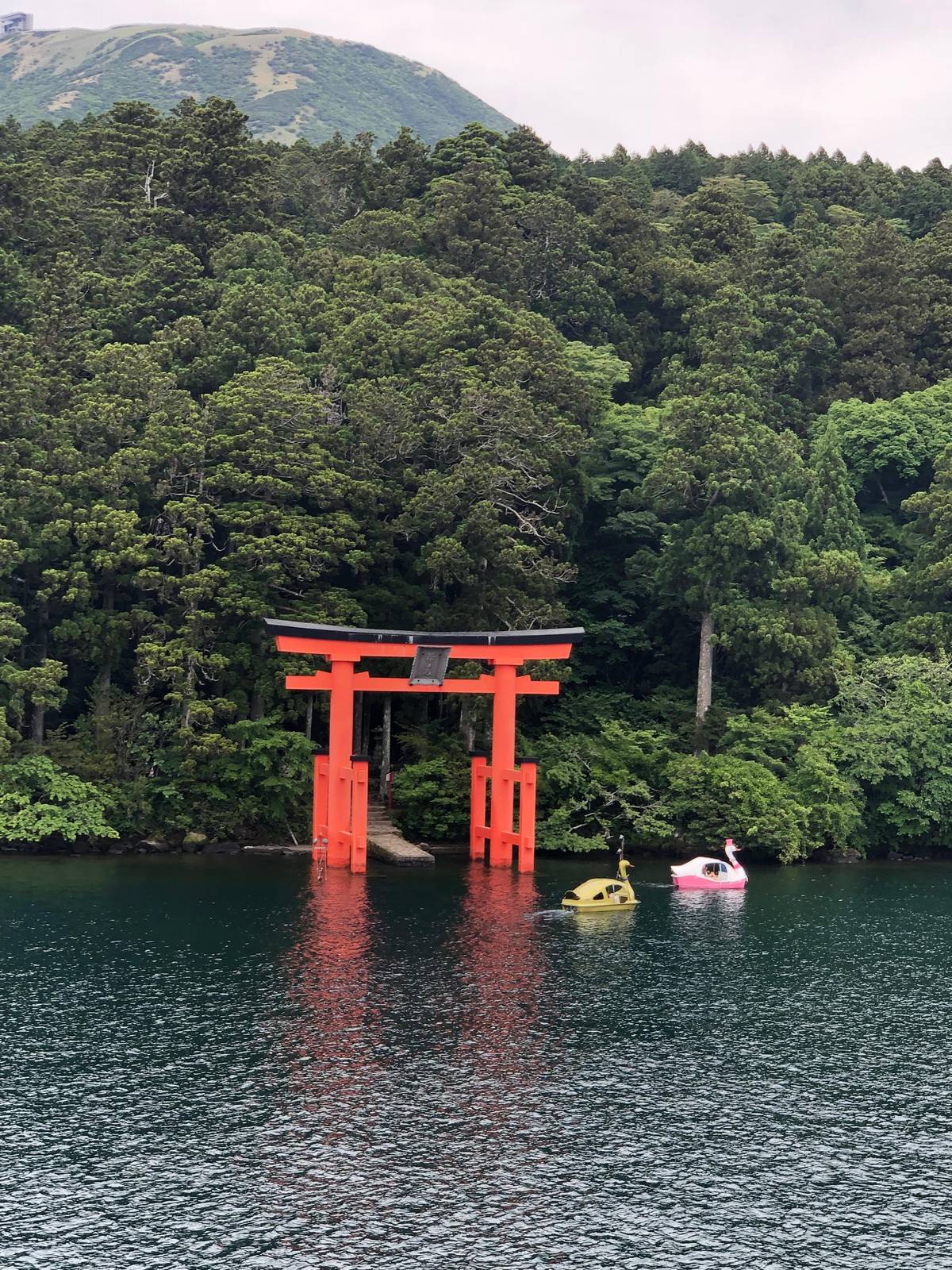
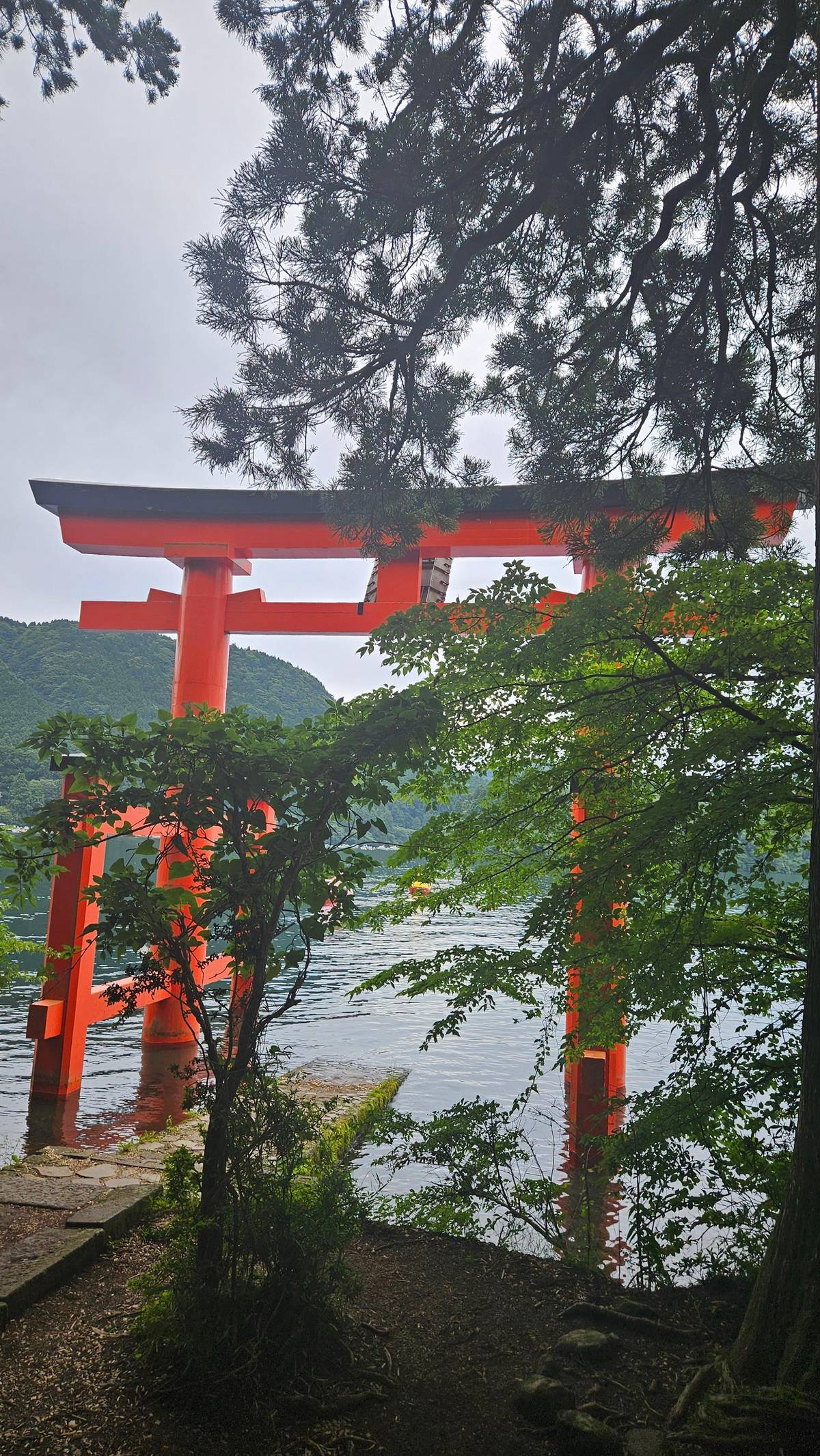
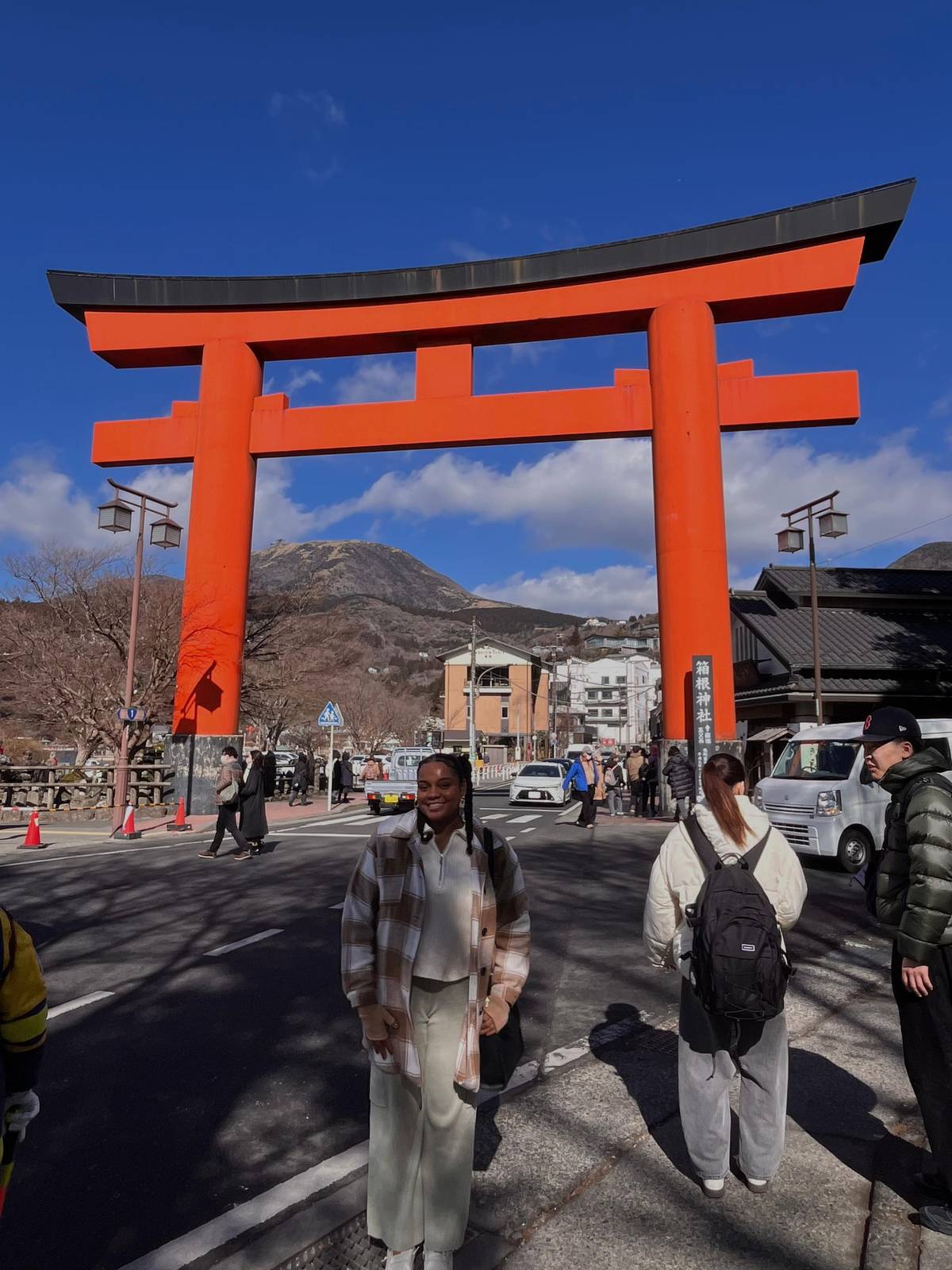
The coach tour this site sells does not stop at the museum. Its listed route covers Hakone Shrine, the Togendai pier, the ropeway, Owakudani, Lake Yamanaka and Oshino Hakkai. If the museum matters to you, give it its own day or add it to a night in Hakone.
Some guided options do include it. A private customizable day from Tokyo lists the Hakone Open-Air Museum among its stops with an hour there. A small-group day from Tokyo with up to 9 people lists 2 hours at the museum alongside Lake Ashi and Hakone Shrine.
On your own, the easiest plan is the train: Yumoto, up the Tozan line, the museum in the morning when it is quiet, then lunch in Gora and the park in the afternoon. The museum's gardens are at their best in the clear light of autumn, but any season works, and a misty day turns the sculptures into something closer to ghosts. Bring a light layer whatever the forecast; the museum stands well above Yumoto, and the breeze across the open lawns can feel cooler than the valley floor.
Your Hakone day
Pick a date, meet in Tokyo, and cancel free up to 24 hours before.
2,000 yen for adults on the day. Online tickets are 1,800 yen for adults; preschool children enter free.2319
Every day, 9:00 to 17:00. Last admission is 30 minutes before closing, so arrive by mid-afternoon at the latest.1
Tozan train to Chokoku-no-Mori. The station is a 2-minute walk from the entrance; from Gora it is about 3 minutes by train.414
Over 300 in the collection. The current pavilion exhibition has 135 works on display in 20 themes.1516
Outdoors, for personal use. Flash, video, tripods and selfie sticks are not allowed in the indoor exhibition area.18
Yes, with planning. Woods of Net is for children aged 12 and under, though steep slopes can be hard with toddlers.2050
No. The coach day's listed stops are the shrine, the pier, the ropeway, Owakudani and the Fuji lakes.
Sources